Featured Articles
-

Recycling
19 February, 2019
-

Resource Depletion and Economic Development
19 February, 2019
-

The Case for Negative Growth
19 February, 2019
-

Food Security
18 February, 2019
Outside The Box
A place for opinions that may not fit neatly in the scope of the Foundation.
The Sixth Mass Extinction
The 6th extinction is already well underway. Remember the old days of bug splats on the windshield when driving in the country? Where are they now? An article in the Guardian reports;
“More than 40% of insect species are declining and a third are endangered, the analysis found. The rate of extinction is eight times faster than that of mammals, birds and reptiles. The total mass of insects is falling by a precipitous 2.5% a year, according to the best data available, suggesting they could vanish within a century.”
A study last year showed a 76 percent decrease in flying insects in the past few decades in German nature preserves.
Frogs are also in danger. Sixty seven percent of the 110 or so species of Atelopus, which are endemic to the American tropics have gone extinct due to climate disruption.
The extinction of larger animals and especially the massive die off of frogs has received more attention, but insects are an essential base to the terrestrial food chain. Plankton fills that role in the ocean and there too die offs are occurring as the oceans warm. Krill in the waters off Antarctica are predicted to decrease by 40% over the remaining century. In another example, oceanic heat waves have devastated the ecosystem in the Bearing Straits causing blooms of toxic plankton that caused die offs of birds, seals and whales.
We must face the fact that this human experiment of attempting to control and over rule nature is ending. It will involve massive changes in our lives and those of our children. What they are will depend on how we adapt in the next few years.
There is only one earth, shared by upwards of 10 million species. The existence of each one depends on a vast web of interconnections, bonding living organisms to each other and to their environment.
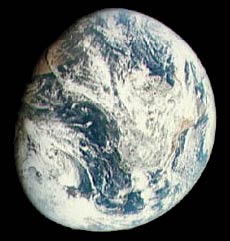
The play of evolution has graced man with the brainpower necessary to control many aspects of his environment. This has led to the illusion that he is separate from the biological web, and no longer dependent on it.
A 20 Year Retrospective
The destruction of the planetary ecosystem is ongoing. In the 20 years since this site was put up in 2000 many details have changed, but the overall course of events has not changed. Energy consumption continues to rise, CO2 levels continue to rise, ocean fish resources continue to decline, etc. It appears that not only are governments unable to commit to meaningful policy changes, but in vital areas we are moving in the wrong direction. President Trump began the process of dismantling hard won gains of his predecessors, pulling out of the Paris Climate Agreement, and paralyzing institutions such as the EPA that we depend on to defend the quality of our environment. The republican party intends to continue that process by any means possible. Meanwhile, the implications of global warming are becoming evident to almost everyone, and most people have been directly affected in some way. We are losing the rainforest, sometimes referred to as the lungs of the earth, faster than at any time in history. Saving forests, fish stocks, soil conservation, or fresh water is not a function of inventing technology, but simply intelligent management, a quality dangerously lacking at present. The disconnection between our actions and what the natural world is telling us is catastrophic. What is required is a dramatic change in our arrogant attitude toward the earth that supports and nourishes us, a return to respecting all life as part of one interdependent web.
Toxic Planet
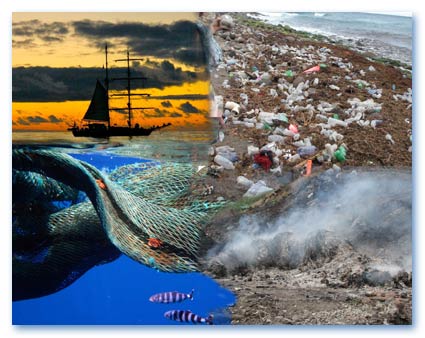
The accumulation of toxins in the environment is a developing threat that we have only begun to explore. The effects of Persistent Organic Pollutants (POPs) are cumulative and the toxins remain in the environment for an indefinite length of time. The bio-accumulation of toxins is well known. The damage caused by toxins and endocrine disruptors is only now being defined. One vector for this contamination is plastic thrown or washed into the ocean which attracts and concentrates POPs then breaks down into particles that are ingested by fish at the bottom of the food chain. Whole Systems Foundation is involved in several aspects of this issue from research to practical steps to reduce plastic waste. See: Project Plastic Planet
Featured Articles
-
Recycling
19 February, 2019
-
Resource Depletion and Economic Development
19 February, 2019
-
The Case for Negative Growth
19 February, 2019
-
Food Security
18 February, 2019
Contact Form
There is only one earth, shared by upwards of 10 million species. The existence of each one depends on a vast web of interconnections, bonding living organisms to each other and to their environment.
The play of evolution has graced man with the brainpower necessary to control many aspects of his environment. This has led to the illusion that he is separate from the biological web, and no longer dependent on it.
Update! New Site
The evolution of the planetary ecosystem is ongoing. In the 10 years since this site was put up in 2000 many details have changed, but the overall course of events has not changed. Energy consumption continues to rise, CO2 levels continue to rise, ocean fish resources continue to decline, etc. One significant change has occurred and that is awareness of the effects man is having on the environment. Concepts of peak oil, climate change and unsustainable fisheries are now in the daily news. What are we not paying attention to?
Toxic Planet
The accumulation of toxins in the environment is a developing threat that we have only begun to explore. The effects of Persistent Organic Pollutants (POPs) are cumulative and the toxins remain in the environment for an indefinite length of time. The bio-accumulation of toxins is well known. The damage caused by toxins and endocrine disruptors is only now being defined. One vector for this contamination is plastic thrown or washed into the ocean which attracts and concentrates POPs then breaks down into particles that are ingested by fish at the bottom of the food chain. Whole Systems Foundation is involved in several aspects of this issue from research to practical steps to reduce plastic waste. See: Project Plastic Planet